Vehicle patrol security across Houston — HOA communities in Katy and Sugar Land, Ship Channel industrial parks, commercial property portfolios, and construction sites. Company vehicle typically provided.
Houston's 665 square miles — the fourth-largest land area of any US city — creates a mobile patrol market that's simply larger and more geographically dispersed than most metros. The suburban HOA segment alone is enormous: master-planned communities in Katy, Sugar Land, The Woodlands, Pearland, and Friendswood run patrol contracts that cover hundreds of homes per route. These communities need access control, parking enforcement, amenity monitoring, and disturbance response — and a vehicle patrol is the only cost-effective way to cover the ground. GuardTexas (in business since 1976), Cascadia Global Security, and regional HOA-focused firms dominate this segment.
The industrial and logistics corridor adds a different layer. The Ship Channel and Beltway 8 distribution belt contain hundreds of industrial parks, warehouse campuses, and logistics facilities that can't justify a full-time fixed-post officer but need consistent overnight patrol coverage. Mobile officers cover these properties on defined routes, checking gates, perimeter fencing, and equipment staging areas on a schedule that documents every check-in. TWIC-required accounts on the Port corridor pay above standard patrol rates.
Commercial property portfolios — strip centers, office parks, and parking structures across the metro — round out the patrol market. Property management firms contract patrol coverage for their full portfolio, which means a single officer might cover 10 commercial sites on a single route. Allied Universal runs large commercial and utilities patrol programs in Houston, providing company vehicles and consistent scheduling for officers who want route-based work without the commitment of a fixed industrial post.
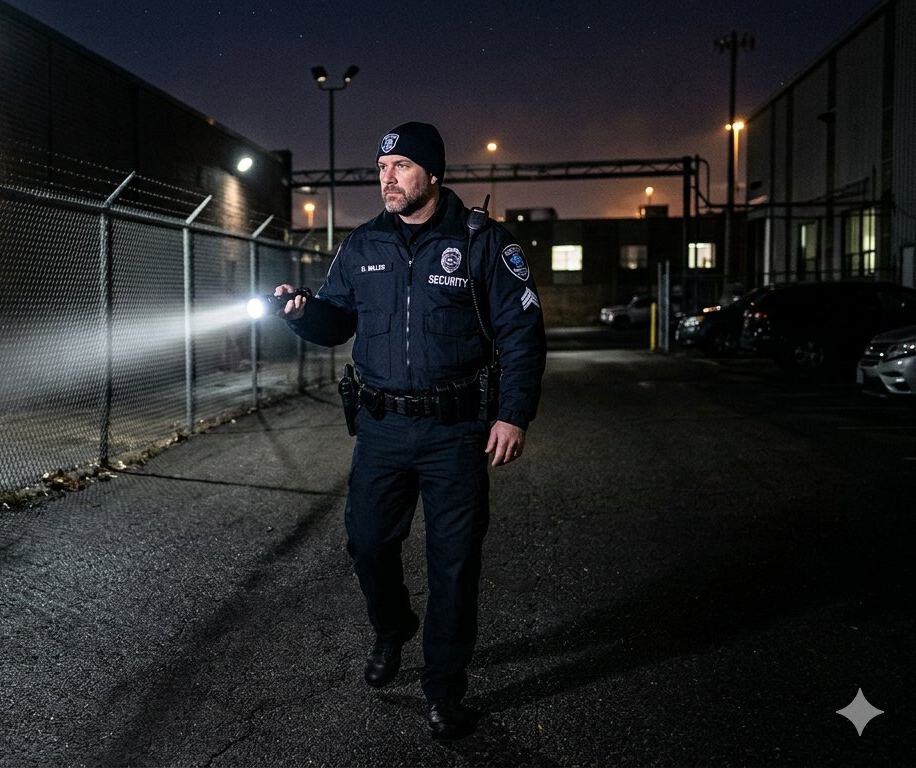
Mobile patrol officers in Houston spend most of their shift in a company vehicle, executing a defined route across multiple properties. The core loop is check-in, observe, document, and move — arrive at a property, conduct a visual inspection and any required foot check of the perimeter or parking area, log the time and any observations in a mobile reporting app, and proceed to the next stop. At HOA accounts, this includes parking enforcement, amenity area checks, and responding to resident complaints. At industrial accounts, it includes gate checks, equipment verification, and perimeter sweeps.
What separates a strong patrol officer from an average one is documentation and situational awareness. Every property check creates a timestamped log that the client reviews. Officers who miss checks, document vaguely, or respond slowly to incidents build a record that costs them the route. Officers who are consistent, thorough, and communicate clearly with dispatch and clients build long-term route assignments and move into account supervisor roles.
Response capability matters on patrol routes in ways it doesn't on fixed posts. When something happens at a property — a car break-in, a trespasser, a suspicious vehicle — the patrol officer is the first responder, often working alone with HPD response times measured in minutes. Comfort working independently, making judgment calls under pressure, and knowing when to call for backup rather than engaging are the skills that define patrol work in Houston.
Houston mobile patrol pay varies by account type. Unarmed residential and commercial routes average $16–17.45/hr. Armed patrol and industrial routes with TWIC requirements run $18–22/hr. Most accounts provide a company vehicle.
Mobile patrol in Houston means variety, independence, and a company vehicle. If you want route-based work across a city this size, the demand is consistent.
See More Jobs →New openings posted regularly across Houston, TX. Get notified the moment something matches.
By submitting I agree to receive SMS and email updates regarding jobs from BlackBarJobs. Msg & data rates may apply. Reply STOP to unsubscribe.