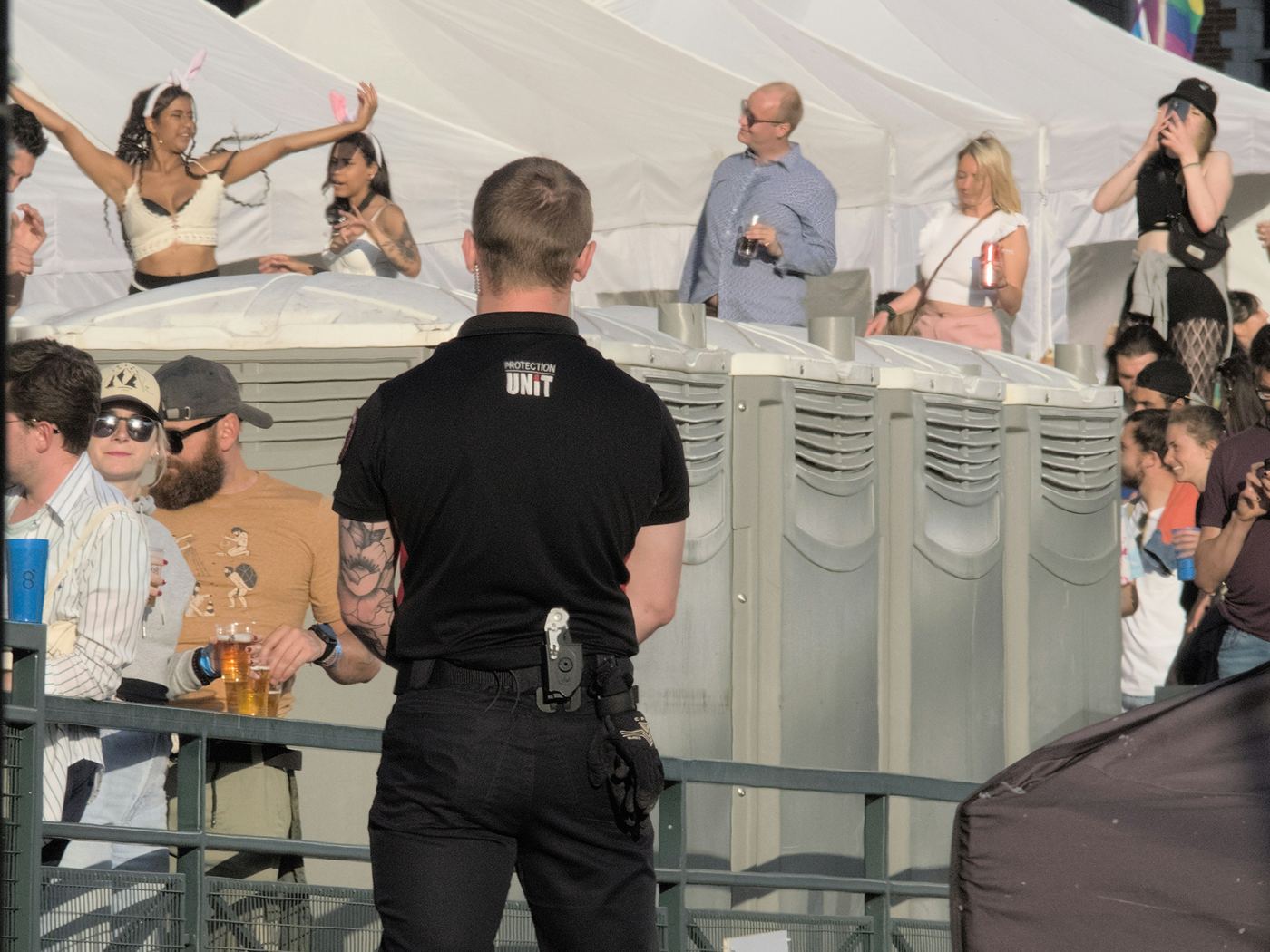
Door, floor, and crowd management security across Houston's nightlife districts — Midtown, Washington Avenue, EaDo, Montrose, and Downtown. Thursday through Saturday nights, year-round.
Houston's nightlife security market is defined by its district diversity. Washington Avenue runs the city's highest-volume clubs — Clutch Bar enforces a dress code and bottle minimums on Saturdays, Concrete Cowboy draws a country-leaning crowd with line dancing and a mechanical bull, and newer venues like Ambia (Latin dance) and Status have expanded the strip. These venues run the largest door and floor security teams in the city outside of major sports venues.
Midtown is the consistent workhorse of Houston bar security. The bar density along Bagby, Travis, and lower Westheimer means officers can work multiple venues in sequence, and consistent weekend volume makes Midtown one of the most reliable segments for officers who want regular bar security hours. EaDo's explosion of warehouse music venues — Warehouse Live, Mercy Nightclub, The Continental Club — has created a newer segment with a younger, arts-oriented crowd and live music crowd management dynamics that pure nightclub security doesn't encounter.
Montrose, Houston's LGBTQ+ hub along Westheimer, runs a security environment that rewards composure, discretion, and an inclusive disposition over hard-enforcement. Drag shows, club nights, and a dense concentration of bars require officers who de-escalate without creating confrontation. Downtown's GreenStreet complex, Main Street bar corridor, and rooftop venues operate across the week, not just weekends, adding a corporate and visitor-heavy segment to the mix.
Bar and club security involves three overlapping functions: door, floor, and TABC compliance. Door security is most visible — checking IDs, enforcing dress codes, managing line and capacity, and turning away guests who don't meet entry standards. At Washington Avenue clubs with strict dress codes, the door officer makes judgment calls on hundreds of guests per hour while maintaining a professional, non-confrontational demeanor.
Floor security is crowd management and incident response inside the venue — monitoring for over-intoxication, breaking up altercations before they escalate, escorting removed guests, and maintaining a calm presence on a crowded dance floor. The ability to de-escalate quickly, work effectively with bar staff, and make the call to involve HPD when necessary are the defining skills.
TABC compliance runs through every shift — Texas law requires ID verification for guests appearing under 30, prohibits service to visibly intoxicated patrons, and mandates a 2am last call and close. Bar security officers enforce these rules as a normal function, and violations can cost a venue its liquor license. Officers who understand TABC and work proactively with management on compliance are significantly more valuable than those who treat it as a side concern.
Bar and club security in Houston runs $15–22/hr depending on venue type and role. Washington Avenue clubs and upscale venues trend higher; neighborhood bars lower. Most work is weekend evenings.
Houston's nightlife runs Thursday through Saturday, year-round, across five distinct districts. Bar security is one of the most accessible weekend evening security categories in the city.
Browse All Jobs →New openings posted regularly across Houston, TX. Get notified the moment something matches.
By submitting I agree to receive SMS and email updates regarding jobs from BlackBarJobs. Msg & data rates may apply. Reply STOP to unsubscribe.