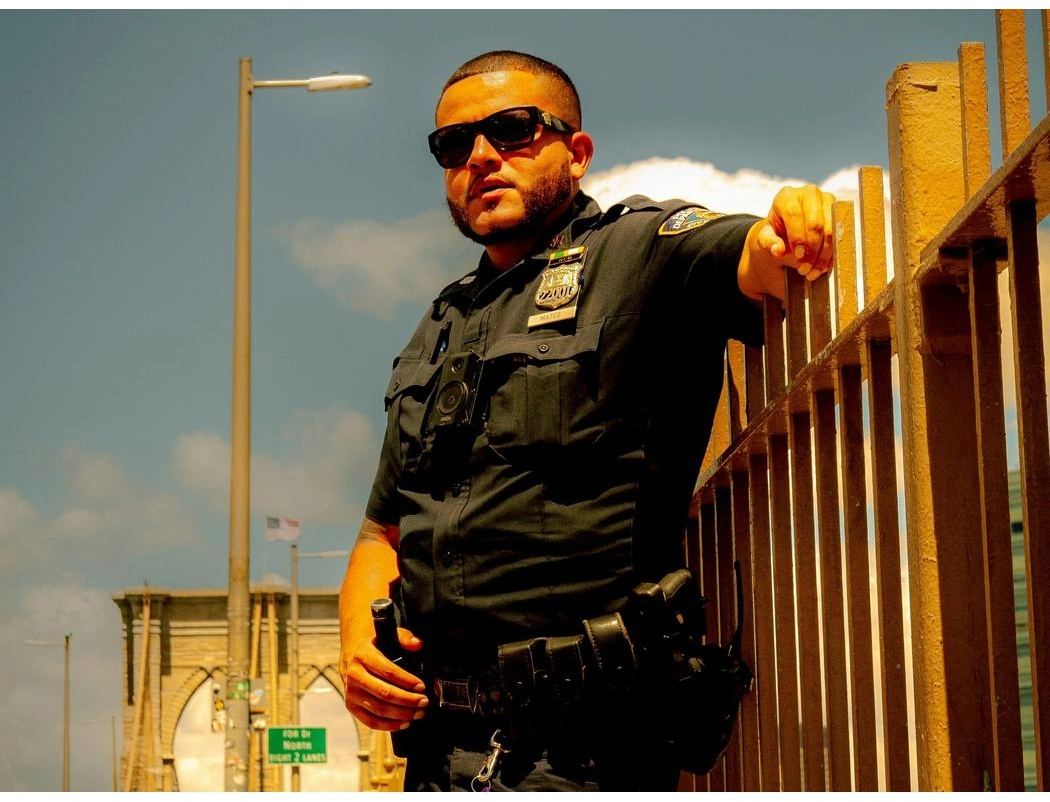
Your military experience translates directly into the Texas security market — license fee waivers, expedited processing, and employers actively recruiting veterans across Dallas–Fort Worth and statewide.
🎖️ Texas Veterans Guide🕐 10 min read📅 Updated May 2026
Veterans consistently advance faster in security than civilian counterparts at equivalent entry points.
The skills that define effective military service — situational awareness, physical composure under pressure, chain-of-command discipline, firearms proficiency, documentation accuracy, and the ability to operate independently in high-stakes environments — are exactly what the Texas private security industry pays a premium for. These are not soft skills that transfer indirectly. They are the primary job requirements for the most demanding and best-compensating security roles in the state.
Texas is also one of the most significant military transition markets in the United States. The state is home to over 1.5 million veterans, with major concentrations in the DFW metro (NAS Joint Reserve Base Fort Worth), San Antonio (Joint Base San Antonio, the largest military installation in the US), El Paso (Fort Bliss), Killeen (Fort Cavazos, formerly Fort Hood), and Corpus Christi (NAS Corpus Christi). Each installation generates a steady flow of service members transitioning into the civilian workforce — and security is one of the most natural and immediately accessible civilian career tracks for the skills they carry.
Veterans consistently reach supervisory and senior roles in Texas security faster than civilian counterparts entering at the same experience level. The discipline, professional conduct standards, and documentation quality that military service instills translate directly into the performance metrics that guard firms and direct employers use to identify officers for advancement.
Texas advantage: Texas law requires state agencies — including DPS — to process license applications from military veterans within 30 days, and explicitly authorizes DPS to credit verified military service, training, and experience toward security licensing requirements. Veterans also qualify for DPS application fee waivers. These benefits apply statewide.
Texas Veteran Licensing Benefits
Texas provides documented, verified benefits to veterans seeking security licenses through the DPS Private Security Bureau. These are not informal preferences — they are statutory protections under Texas law.
Fee Waiver for Veterans
Military veterans who have served on active duty and received an honorable discharge qualify for a waiver of the DPS license application fee. For a Level 2 Non-Commissioned license, this waives the $37 application fee. For a Level 3 Commissioned (armed) license, this waives the $57 application fee. Veterans are still responsible for the pocket card fee ($5), subscription fee ($2), and FBI fingerprint processing fee ($28.25) — but the primary application fee is covered. To claim the waiver, submit a copy of your DD-214 (Member Copy 4 or Member Copy 2) with your TOPS application.
Expedited 30-Day Processing
Under Texas law (Texas Occupations Code §55.005, as amended by SB 422, 88th Legislature), state agencies must issue licenses to military veterans within 30 days of receiving a complete application. For DPS private security licenses, this means your pocket card should arrive faster than the standard 4–6 week civilian processing timeline — though completing your application promptly and submitting all required documents simultaneously is essential to hitting that window.
Military Training Credit
Texas DPS is authorized to credit verified military service, training, and education toward security licensing requirements. In practice this means firearms training documented in your military service record may satisfy portions of the Level 3 range qualification and training hour requirements. This does not eliminate the in-person training requirement added by HB 3424 (effective January 1, 2024) — the 10 minimum in-person hours remain — but military firearms training documentation strengthens your application and may reduce supplemental training costs. Discuss specifics with your chosen Level 3 training provider and confirm with DPS before enrolling.
Military Spouse Benefits
The fee waiver also extends to active duty military spouses who hold a current security license from another state with substantially equivalent requirements — or who held a Texas security license within the past five years. Military spouses relocating to Texas with an active security license from another state should contact DPS about reciprocity and expedited processing options.
To claim your veteran fee waiver: apply through the TOPS portal at tops.portal.texas.gov, select your license type, and upload your DD-214 (Member Copy 4 preferred) when prompted for military documents. The waiver applies to both original and renewal applications.
MOS-to-Security Career Translation
Every branch of the US military has occupational specialties that translate strongly into Texas civilian security roles. Here is the breakdown of the most directly applicable MOS codes and their civilian security equivalents in the DFW and Texas market:
MOS / Rate / AFSC
Branch
Civilian Security Equivalent
DFW Pay Range
31B — Military Police
Army
Armed patrol, corporate security, government security, law enforcement liaison
$22–40/hr
11B — Infantry
Army
Armed patrol, executive protection, close protection detail, tactical security
$20–45/hr
18 Series — Special Forces
Army
Executive protection, high-risk site security, corporate security director
A few notes on reading this table. The DFW pay ranges reflect experienced veterans at premium accounts — not entry-level placements. Veterans entering security directly from service often start at the lower end of these ranges and move up within 12–18 months as they build documented civilian security experience. The gap between what military experience is worth and what entry-level security pays is real — but it closes faster for veterans than for civilian candidates at equivalent levels.
Security clearances held at separation are another distinct asset not reflected in the table. An active or recently held Top Secret or TS/SCI clearance opens government contractor security roles that pay significantly above standard commercial security rates — and that the civilian security market cannot readily access. If you hold an active clearance, prioritize government contractor security roles and cleared facility security positions before entering the standard commercial security market.
Getting Licensed in Texas as a Veteran
The process for veterans is the same as civilians with two key differences: fee waiver eligibility and the potential to credit military training toward licensing requirements. Here is the specific process:
Level 2 — Non-Commissioned (Unarmed)
Complete a DPS-approved 6-hour Level 2 training course. Apply through TOPS with your DD-214 to claim the fee waiver. Submit fingerprints through IdentoGO. Your pocket card should arrive within 30 days under the veteran expedited processing requirement. Total out-of-pocket cost: approximately $95–$185 (course + FBI fingerprint + pocket card/subscription fees, with application fee waived).
Level 3 — Commissioned (Armed)
Requires an active Level 2 commission first, plus the 45-hour Level 3 training course (minimum 10 hours in-person), MMPI psychological exam, and firearms range qualification. Veterans with documented military firearms training should discuss with their training provider whether any military training certificates satisfy portions of the course requirements. Submit your DD-214 with the TOPS application to waive the $57 armed license application fee. Total cost: approximately $300–$680 (with fee waiver applied), versus $340–$735 for civilians.
Level 4 — Personal Protection Officer
For veterans interested in executive protection, the Level 4 PPO license requires an active Level 3 commission plus 15 hours of in-person DPS-approved personal protection training. Veterans with close protection, personal security detail, or dignitary protection experience from military service are competitive candidates for PPO roles in DFW's active executive protection market. See our Dallas executive protection jobs page for current openings.
Tip: When applying through TOPS, upload your DD-214 in the military documents section. If your military firearms training qualifications are documented on your DD-214 or in separate training records, include those as well and note them in the application comments. DPS reviewers can credit this toward licensing requirements at their discretion.
Allied Universal maintains an active veteran recruiting program and has publicly committed to being a veteran-friendly employer. The company actively recruits veterans for armed patrol, corporate campus, and government security roles across Texas — including in DFW, Houston, San Antonio, and Austin. Veterans entering Allied Universal with prior military police or combat arms backgrounds typically receive placement consideration for higher-level accounts more quickly than civilian new hires. Apply directly through aus.com and flag your military service on the application.
Securitas
Securitas holds major DFW accounts in healthcare, corporate, and industrial security. The company actively recruits veterans and recognizes military experience in placement decisions. Healthcare security at Baylor Scott & White and Texas Health Resources, corporate campus security in the Plano/Frisco corridor, and industrial security in the Garland and Irving zones are all active Securitas accounts in the DFW market.
Parkland Health (Dallas County)
Direct county employment at Parkland's Level I trauma center in Dallas offers some of the most competitive total compensation in the DFW security market — government pension, health insurance, and structured pay scales. Veterans with prior security, law enforcement, or military police backgrounds are competitive candidates for Parkland security positions. Apply through Parkland's HR portal directly.
JPS Health Network (Tarrant County)
The equivalent direct-hire opportunity in Fort Worth. JPS emergency department security is one of the most demanding healthcare security environments in Tarrant County, requiring the kind of composure and physical readiness that military service develops. Apply through JPS HR directly.
Federal Protective Service Contractors
Multiple guard firms hold Federal Protective Service contracts for federal building security in DFW. Veterans — particularly those with prior law enforcement or military police backgrounds — are preferred candidates for these cleared security roles. Active or recently separated veterans should specifically target FPS-contracted positions in the downtown Dallas federal building complex and federal courthouse.
Corporate Security at Fortune 500 Headquarters
AT&T, American Airlines, BNSF Railway, Texas Instruments, and other DFW Fortune 500 companies maintain in-house security departments and regularly hire veterans for senior security roles. Military experience — especially command-level positions — is highly valued for corporate security supervisor and manager roles at this tier. These positions are competitive but offer the best total compensation in the DFW market.
Veterans with firearms qualifications from military service are among the most qualified candidates for DFW armed patrol positions. Once your Level 3 commission is active, armed patrol at commercial, industrial, and residential corridors is immediately accessible. Pay runs $18–27/hr for patrol positions, with overnight and weekend differentials on top. This is the fastest path from separation to employed in Texas security for veterans with firearms backgrounds.
Hospital Security — Healthcare Mission Parallel
Veterans with combat medic (68W) or any military medical support background are particularly well-suited for healthcare security roles. The hospital environment — high-stakes, fast-moving, requiring calm decision-making under pressure — parallels combat support environments in ways that civilian candidates without military service rarely experience. Parkland and JPS are the top targets for veterans in this category.
Data Center Security — Technology Background
Veterans with signals, intelligence, or technical military backgrounds find natural fits in data center security. The access control rigor, documentation precision, and professional conduct standards of hyperscale and colocation facility security mirror military operating standards more than almost any other civilian security environment. Pay runs $19–45/hr across experience levels — the highest-paying commercial security category in DFW.
Executive Protection — Combat Arms and Close Protection
Veterans with combat arms, special operations, or personal security detail experience are the primary candidate pool for professional executive protection in DFW. The city's concentration of corporate executives, high-net-worth individuals, and major events creates active demand for Level 4 PPO-licensed officers with verifiable close protection credentials. Pay runs $35–150/hr depending on assignment complexity.
Government and Cleared Facility Security
Veterans holding active security clearances have access to cleared facility security roles that the civilian security market cannot reach. DFW has a significant population of government contractors and federal agencies — Lockheed Martin (Fort Worth), Bell Textron, L3Harris, and numerous defense and intelligence contractors — that require cleared security staff. Clearance-based security roles consistently pay at the top of the commercial security market.
Veterans entering Texas security typically compress the standard career timeline significantly — reaching supervisory and senior roles in 2–3 years that civilian candidates take 5–7 years to reach. Here is what the realistic progression looks like:
Licensed entry (Level 2 or 3) — Month 1–3. Get your DPS license using the veteran fee waiver. Start at an account that matches your background: armed patrol for combat arms veterans, healthcare for medics, data center for technical MOS veterans.
Premium account placement — Month 6–12. Use your documented military experience to negotiate placement at a premium account within your guard firm — or apply directly to Parkland, JPS, or corporate security roles. Military experience is the strongest single differentiator at this stage.
Level 3 commission (if not already armed) — Month 6–18. If you separated without pursuing your Level 3, do it within the first year. The fee waiver applies, military training credit may reduce costs, and the pay jump is the same for veterans as civilians — $5–15/hr at specialized accounts.
Supervisor / shift lead — Year 1–3. Veterans typically earn supervisory consideration faster than civilian counterparts given demonstrated command experience, documentation quality, and professional conduct standards. Express interest in leadership roles from day one — don't wait for it to be offered.
Site manager or corporate security role — Year 3–6. The CPP (Certified Protection Professional) certification from ASIS International is the primary differentiator at this level. Pair military command experience with CPP certification for competitive positioning at Fortune 500 direct-hire roles.
Corporate security director — Year 6–10+. DFW's Fortune 500 concentration makes director-level corporate security a realistic long-term target. Salary ranges at this level reach $120,000–$200,000+ with full corporate benefits.
DFW and Texas Military Installations
Understanding the military geography of Texas matters for veterans choosing where to build their security career. DFW sits in a strong position relative to the major Texas installations:
NAS Joint Reserve Base Fort Worth (JRB) — Located in the western DFW metro. Transition assistance programs and active veteran hiring networks in the local DFW security market.
Fort Cavazos (Fort Hood) — Killeen — The largest active-duty installation in the US. Veterans transitioning from Fort Cavazos often relocate to DFW or Austin for civilian employment — both strong security markets.
Joint Base San Antonio — The largest military installation complex in the US by total personnel. San Antonio veterans entering security access a market that — while paying slightly below DFW — has significant volume from JBSA's annual transition pipeline.
Fort Bliss — El Paso — Veterans transitioning in El Paso have a smaller local security market. Many relocate to DFW or San Antonio for broader opportunity.
For veterans relocating specifically for civilian security employment, DFW offers the strongest combination of market size, employer concentration, and premium account access in the state. The metro's Fortune 500 density, healthcare system depth, and growing data center corridor create more paths from entry-level military transition to senior security employment than any other Texas market.
Frequently Asked Questions
Do veterans get a discount on Texas security licenses?+
Yes. Texas DPS waives the primary application fee for military veterans with honorable discharges — $37 for Level 2 (unarmed) and $57 for Level 3 (armed). Veterans still pay the pocket card fee ($5), subscription fee ($2), and FBI fingerprint processing fee ($28.25). To claim the waiver, submit your DD-214 (Member Copy 4 or 2) with your TOPS application. This applies to both original and renewal applications.
Does my military firearms training count toward the Texas Level 3 license?+
Texas DPS is authorized to credit verified military training toward licensing requirements — but this is at DPS discretion and does not eliminate the 10-hour in-person firearms and defensive tactics requirement added by HB 3424 (effective January 1, 2024). In practice, documented military firearms qualifications strengthen your application and may reduce supplemental training costs. Submit your military training records with your application and discuss specifics with your chosen training provider and DPS before enrolling.
What MOS gives the best advantage in Texas security?+
Military Police (31B Army, 5811 USMC, MA Navy, 3P0X1 Air Force) backgrounds give the strongest direct advantage — law enforcement training, access control experience, and firearms proficiency all map directly to the highest-demand Texas security categories. Combat arms backgrounds (11B, 0311, 11-series) give strong advantages for armed patrol and executive protection. Technical and signals backgrounds (25-series) translate well to data center and government security. No military background is a disadvantage — but the law enforcement and combat arms MOS codes access the highest-paying security roles fastest.
How fast can a veteran get a Texas security job after separation?+
Faster than most expect. Veterans who complete their Level 2 or Level 3 training before separation — or within the first 30 days after — can be employed within 6–8 weeks of leaving service. The veteran expedited 30-day processing window helps. The fastest path: complete training, get hired by Allied Universal or Securitas DFW, employer sponsors TOPS application, pocket card arrives within 30 days. Many veterans are in paid security roles within 60 days of their separation date.
Does a security clearance help get security jobs in Texas?+
Significantly. An active or recently maintained Secret or Top Secret clearance opens cleared facility security roles at government contractors and federal agencies in DFW — Lockheed Martin, Bell Textron, L3Harris, and numerous defense and intelligence contractors — that pay at the top of the Texas commercial security market. Cleared security roles are not accessible to civilian candidates without prior government or military clearance, giving cleared veterans a distinct competitive advantage. If your clearance is still active, prioritize cleared security roles before the clearance lapses.
Is DFW or San Antonio better for veteran security jobs?+
DFW offers a stronger security employment market overall — more Fortune 500 employers, more premium account types, higher average pay, and a larger total job market. San Antonio has the higher volume of veteran transitions given JBSA's scale, but the local security market is smaller and pays slightly below the Texas average. For veterans prioritizing long-term career ceiling and compensation, DFW is the stronger choice. For veterans prioritizing proximity to an active military community during transition, San Antonio's volume of veteran support resources is unmatched in Texas.